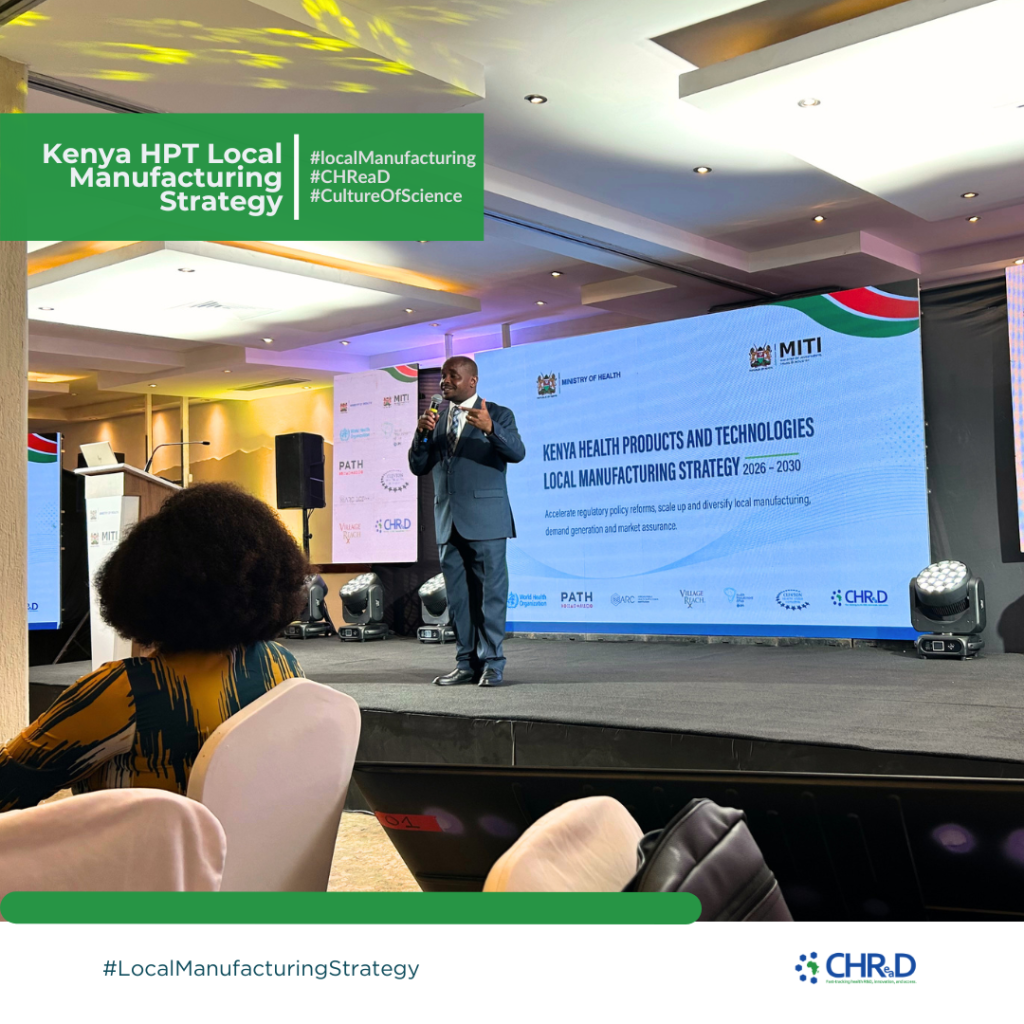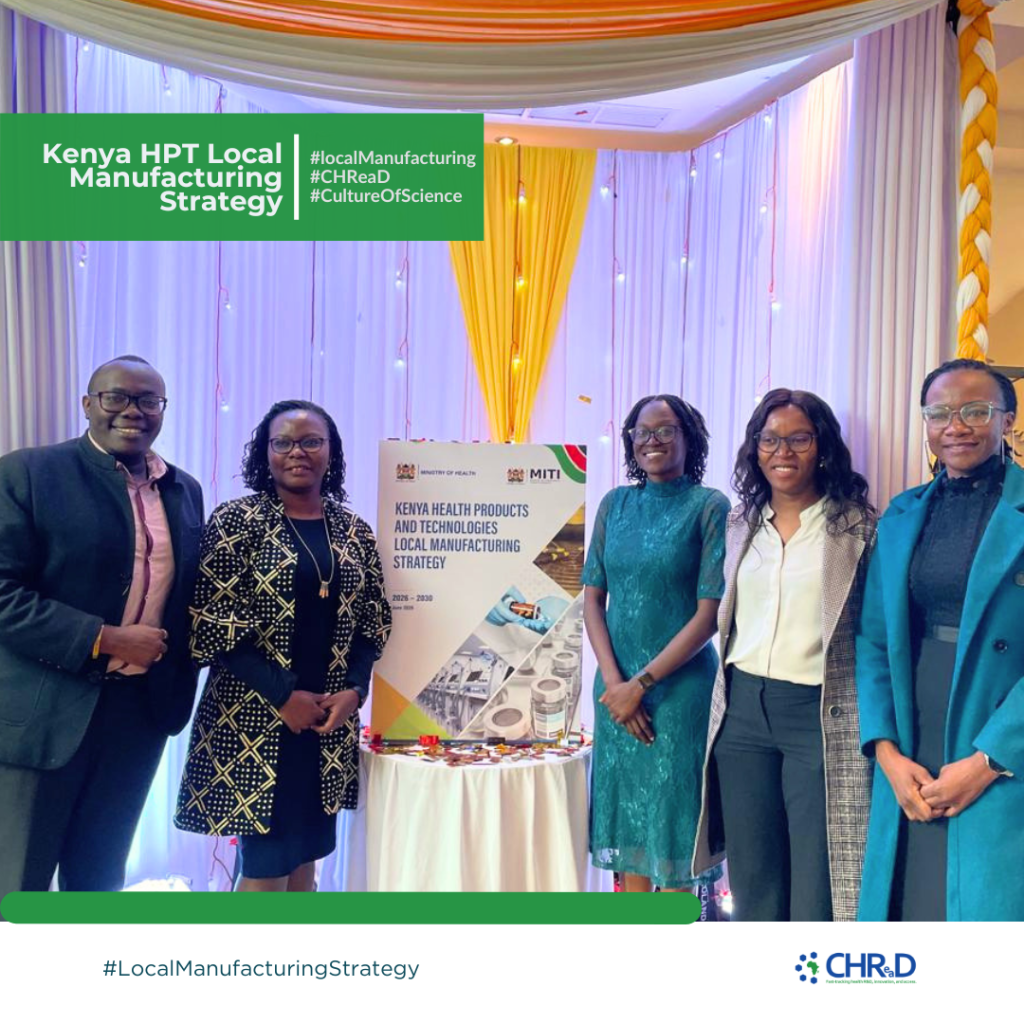
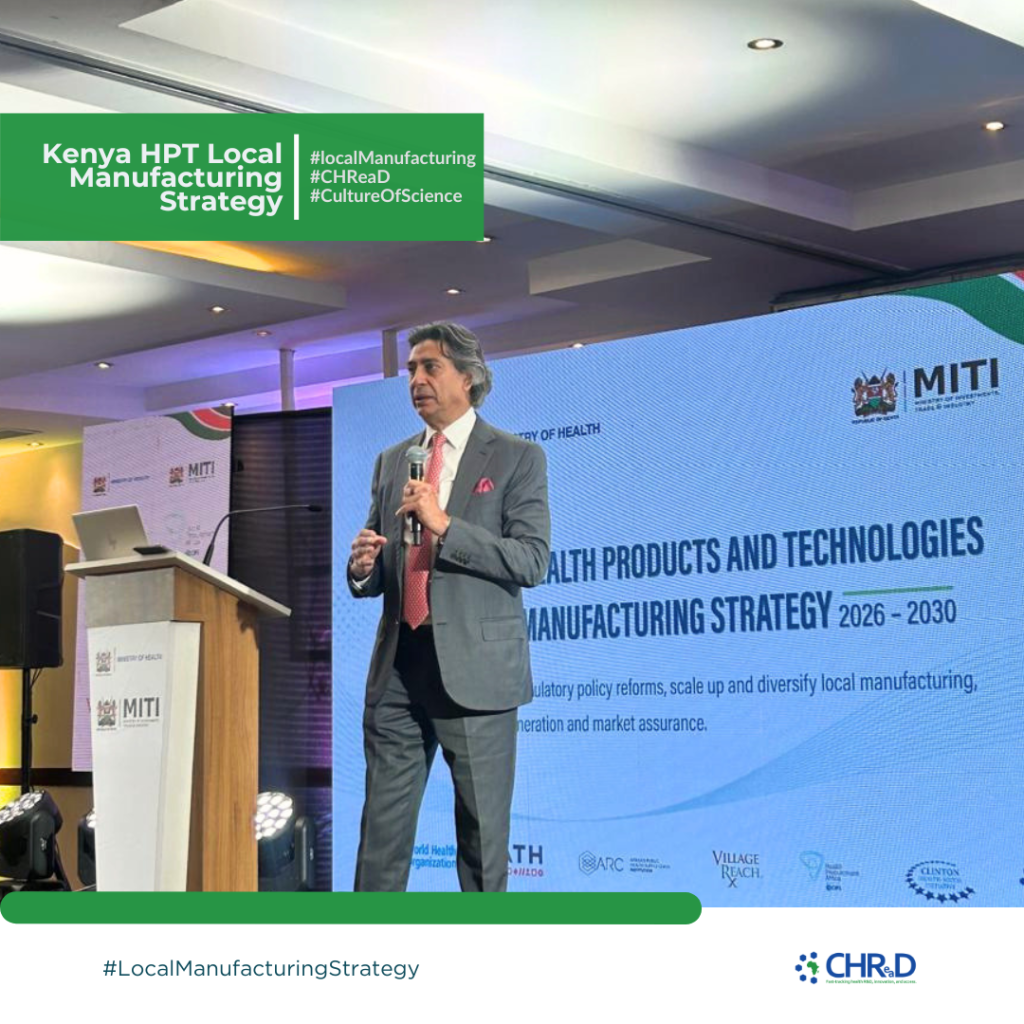
The launch of the Kenya Health Products and Technologies Local Manufacturing Strategy 2026–2030 marks an important milestone in Kenya’s journey toward health sovereignty and resilience.
CHReaD congratulates the Ministry of Health, the Ministry of Investments, Trade and Industry, manufacturers, researchers, development partners, and all stakeholders who contributed to developing this ambitious roadmap. Having participated in the consultative process, we are encouraged by the strategy’s focus on three critical pillars: financing manufacturing, strengthening research and development, and aggregating demand to create sustainable markets.
The case for local manufacturing has never been stronger. Kenya currently imports the majority of its pharmaceutical products and nearly all vaccines used within the country. This dependence exposes the health sector to global supply disruptions, foreign exchange fluctuations, and rising costs. Local manufacturing offers an opportunity to improve access to essential health products, create jobs, retain value within the economy, and strengthen national health security.
Yet the launch of a strategy is only the beginning.
The real work lies in implementation.
First, Kenya must create an enabling environment that allows local manufacturers to compete and grow. This includes targeted tax reliefs and fiscal incentives for manufacturers investing in pharmaceutical, diagnostic, vaccine, and medical technology production. If local industries are expected to compete with imported products, they must be supported through policies that reduce production costs and encourage long-term investment.
Second, financing must extend beyond infrastructure and equipment to people. Building a thriving manufacturing sector will require significant investment in human capacity—from scientists, pharmacists, and biomedical engineers to regulatory specialists, quality assurance experts, and production technicians. A manufacturing strategy cannot succeed without a workforce strategy.
Third, Kenya must strengthen public trust in locally manufactured health products. Quality must remain non-negotiable, but quality alone is not enough. Healthcare workers, procurement agencies, and the public must have confidence that products made in Kenya meet the highest standards of safety, efficacy, and reliability. Building this trust will require strong regulation, transparent quality assurance systems, and sustained science communication and public engagement.
Finally, manufacturers need markets. Factories cannot thrive without predictable demand. Government, counties, healthcare providers, and regional partners must work together to create procurement systems and market incentives that encourage investment in local production. Building markets for manufacturers is just as important as building manufacturing capacity itself.
For CHReaD, the strategy’s emphasis on research and innovation is particularly significant. Kenya possesses world-class researchers and institutions, but too often scientific discoveries stop at publication. The opportunity before us is to build stronger pathways that transform research into products, products into industries, and industries into improved health outcomes for communities.
The success of this strategy will not be measured by the document launched today. It will be measured by the factories built, the workforce developed, the products trusted, the markets created, and ultimately the lives improved.
Kenya has outlined a bold vision for local manufacturing. The task before all of us, government, industry, researchers, civil society, and development partners is to turn that vision into reality.